
Search By Square Foot
• Up to 1000 Sq Ft
• 1001 - 1500 Sq Ft
• 1501 - 2000 Sq Ft
• 2001 - 2500 Sq Ft
• 2501 - 3000 Sq Ft
• 3001 - 3500 Sq Ft
• 3501 - 4000 Sq Ft
• 4001 - 4500 Sq Ft
• 4501 - 5000 Sq Ft
• 5001 Sq Ft And Up
Search By Square Foot
• Up to 1000 Sq Ft
• 1001 - 1500 Sq Ft
• 1501 - 2000 Sq Ft
• 2001 - 2500 Sq Ft
• 2501 - 3000 Sq Ft
• 3001 - 3500 Sq Ft
• 3501 - 4000 Sq Ft
• 4001 - 4500 Sq Ft
• 4501 - 5000 Sq Ft
• 5001 Sq Ft And Up
.png)
(1).png)
by Rachel Lyon, Editorial Director for The House Designers
Are you a fan of large windows? You're not alone! Extensive window designs have been featured in large luxury homes for years, but you’ll find them making their ways into plans of all sizes nowadays. Whether they simply accentuate and brighten spaces or really make a statement on the walls of two-story foyers and great rooms, deciding to generously incorporate windows is an investment that repays in natural light, view-capturing potential, enhanced beauty, and overall style.
Despite the obvious pros, many people are wary of one potential con: the risk of reduced household efficiency. Stand next to old windows during winter and you might feel the chill from outside creeping in. Some people think the answer is to limit windows in favor of efficiency, because nobody wants to deal with a drafty home that costs more to keep comfortable, but this is contrary to the aesthetics that so many love. You might be surprised to learn that large windows can actually be an environmentally and wallet-friendly choice in the long term! Here are the benefits you can expect from a fantastic window design, provided you choose windows that meet expectations in terms of performance.
Understanding Window Efficiency
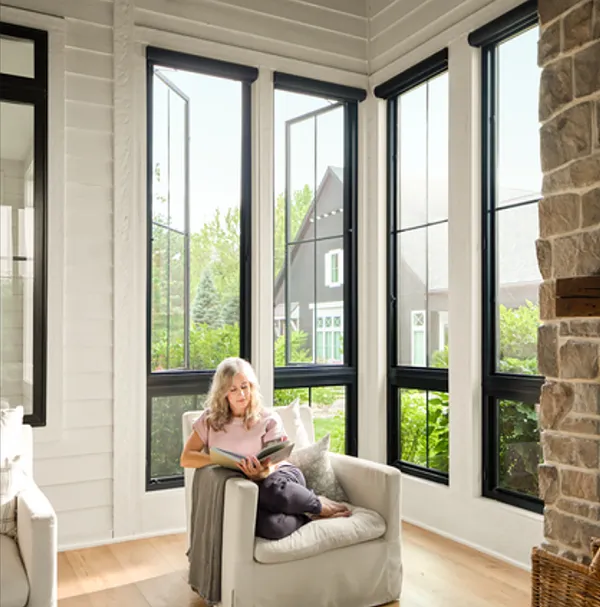
If you’re building a house, you’ve probably heard various professionals talk about R-values and why choosing products with higher ones offers the best insulation and, in return, efficiency. While this measure works for things like walls and doors, windows function differently and use other terms to describe how they act as an intermediate between the interior of a home and its outdoor environment.
U-factor – Describes the rate at which heat is lost through the window to the outdoors
Solar Heat Gain Coefficient (SHGC) – Describes the amount of heat from the sun that passes through a window to the indoors
Maybe you’ve heard that you should always choose the highest R-value to best control your interior climate, but the same can’t be said for windows. A professional will always ask for information about your house before offering suggestions, because the perfect window in Maine would actually be a huge problem in Florida. What remains constant across all locations is the need for high-quality seals and weather stripping—you don’t want to have to think about air movement through a closed window negating all the good that the right type of glass does for your home’s efficiency. Invest wisely!
Choosing the Right Glass
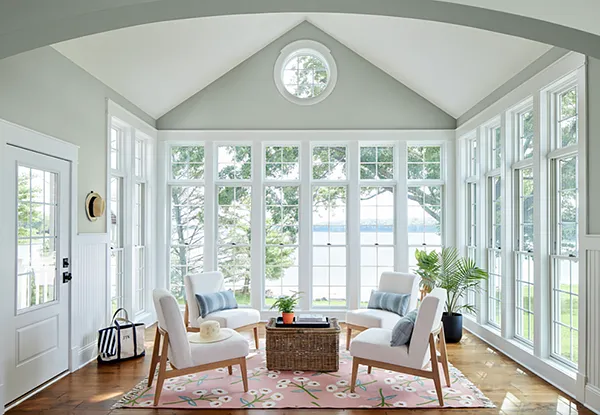
The rules of balancing U-factor and SHGC are fairly straightforward. Think about a frigid northern climate where keeping warm is the priority; you want a low U-factor to minimize the loss of heat through the window and a high SHGC to let in more free solar heat. On the other hand, homeowners in hot southern areas might not be as concerned with U-factor and instead invest more heavily in a product with a low SHGC to prevent heat from entering the house. Visible transmittance (VT) becomes something else to consider in these cases, because the whole point of a window is to let in light and allow you to view the surroundings, but it can be darkened by heat-reducing measures. Select a high VT to allow more light inside while the low SHGC blocks heat.
There are three main variables that go into the construction of efficient windows: number of panes, insulating gases, and low emissivity (Low E) coatings. Most modern windows are made with two panes, although triple pane options are popular among those especially concerned with keeping interior and exterior climates separate. Insulating gases like argon help to slow heat transfer between the panes, resulting in a better thermal barrier. Low E coatings are metallic glazes that you can’t see, but they play an integral role in directing heat where you want it to go; depending on the number of panes, the number of coatings, and the surfaces that are coated, you can control just how radiant heat is reflected and absorbed. There's a lot to consider, but you don't have to go it alone—a window professional will be happy to help you find the right solution for each room in your house!
Making the Most of a Great Window Design
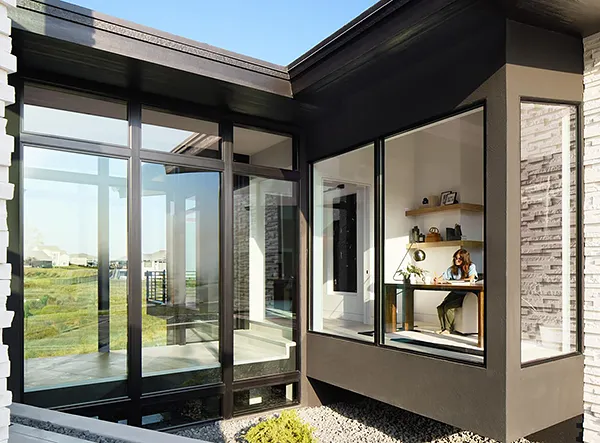
The orientation of the house and which direction windows face are also critical to maximizing efficiency, and this is where those large, beautiful designs can make or break your efforts. Windows can become more than just a source of loss in terms of heating and cooling—with the right insulating features, they can actually improve your home’s performance and work for you.
Take, for instance, a house in an area that experiences harsh winters. Large windows might give you pause, but if they are oriented due south, where the sun shines all day, windows with a Low E1 coating will maximize solar heat gain to help passively heat your interior. The glaze helps prevent heat from escaping, too, and paired with insulating gases that also increase U-factor, you have a window solution that lets you appreciate the beauty of the outdoors, takes advantage of natural light, and helps keep you comfortable in a cold climate. On the other end of the spectrum are homes in very hot, sunny places where the goal is to keep cool. Avoid having large windows face east, northeast, west, and northwest here, as that’s where the harshest summer sun will shine. Low E3 coatings reflect the sun’s rays away to prevent houses from baking, so you can enjoy views of your paradise comfortably. Overhanging eaves and exterior shades also cut solar heat gain, so you definitely don’t have to resort to living like a mole to keep from overheating. Finally, if you live in a moderate climate, a Low E2 coating offers balance by limiting solar heat gain in the summer and retaining heat in the winter.
No matter where you're building, Pella® has stunning windows in every style that you’ll love to use in your home. They offer a wide variety of energy-efficient windows and can help guide you to the best ones for your exact situation. Take a look at their glass types—you'll see options optimized for far northern and southern regions as well as everything in between. Schedule a free consultation today to discuss your needs with an expert, or use our form to sign up for a free estimate for your new home!


