
Search By Square Foot
• Up to 1000 Sq Ft
• 1001 - 1500 Sq Ft
• 1501 - 2000 Sq Ft
• 2001 - 2500 Sq Ft
• 2501 - 3000 Sq Ft
• 3001 - 3500 Sq Ft
• 3501 - 4000 Sq Ft
• 4001 - 4500 Sq Ft
• 4501 - 5000 Sq Ft
• 5001 Sq Ft And Up
Search By Square Foot
• Up to 1000 Sq Ft
• 1001 - 1500 Sq Ft
• 1501 - 2000 Sq Ft
• 2001 - 2500 Sq Ft
• 2501 - 3000 Sq Ft
• 3001 - 3500 Sq Ft
• 3501 - 4000 Sq Ft
• 4001 - 4500 Sq Ft
• 4501 - 5000 Sq Ft
• 5001 Sq Ft And Up
by Rachel Lyon, Editorial Director for The House Designers
Nothing says you’re locked into the façade that your house plans are presented with, or even that already exists on a fully constructed home. In fact, many homeowners want to do something to set their homes apart! One of the best ways to achieve this is by installing some stone or brick to your home exterior. A little goes a long way in improving curb appeal and even increasing property value, so here are some stone accent ideas to consider!
Look Beyond Stone Skirting
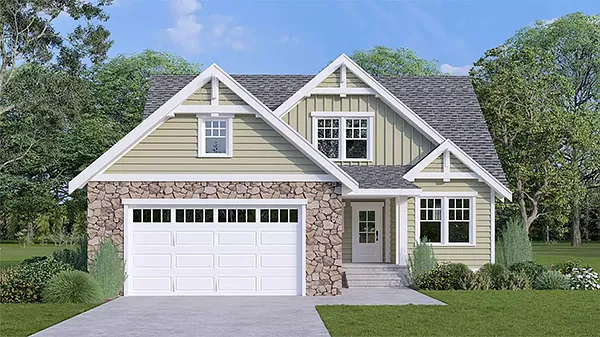
Even if you don’t know the term, you’ve probably seen plenty of stone skirting in real life. Skirting is when stone is applied to the bottom of the house, like around an exposed foundation and potentially up to a third of the wall. It's not that there’s anything wrong with it, but stone skirting has been seen as the safe, easy choice for a while—that’s why it’s so common these days. For stone to make a real impact on your exterior, you need to look beyond this most basic application.
Don’t be afraid to bring stone up the wall. Stone accents commonly reach from the foundation to the roof of single-story homes and from the foundation to the bottom of the second story for two-story homes, but you don’t have to be limited to the norm. Just look at grand traditional and European designs—it’s not uncommon to see them bring stone up a full two or three levels!
Identify Clear Zones to Accent
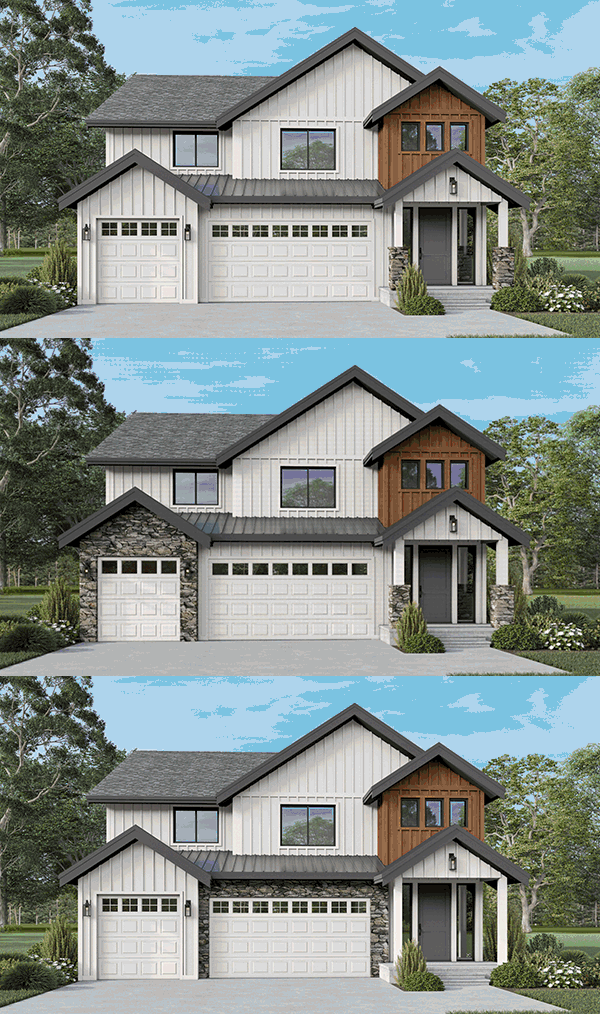
Consider the vertical lines and shapes on your exterior. While it’s easy to draw a horizontal line where stone will end—what you’ll see often with skirting that extends above the foundation—it’s not as simple with the vertical aspect. Stone accents that just end partway across a flat expanse of wall look incomplete at best and forced at worst. That’s why it’s a good idea to apply stone where there’s already some kind of definition.
Every home is different, but most have clear sections to work with. Think around the garage area, up a bump out topped with its own gable, a porch set back from other walls, columns flanking the entry or holding up the roof of a covered porch, etc. Bringing attention to a feature that already exists on the house gives stone something to draw the eye to—it complements what’s there and supports the architecture of the structure rather than looking like a superfluous addition. Depending on the style and breadth of the façade, you may be able to highlight a few areas to balance the view from the street. Remember to take a step back and look at the whole picture!
Avoid Corners to Minimize Cost
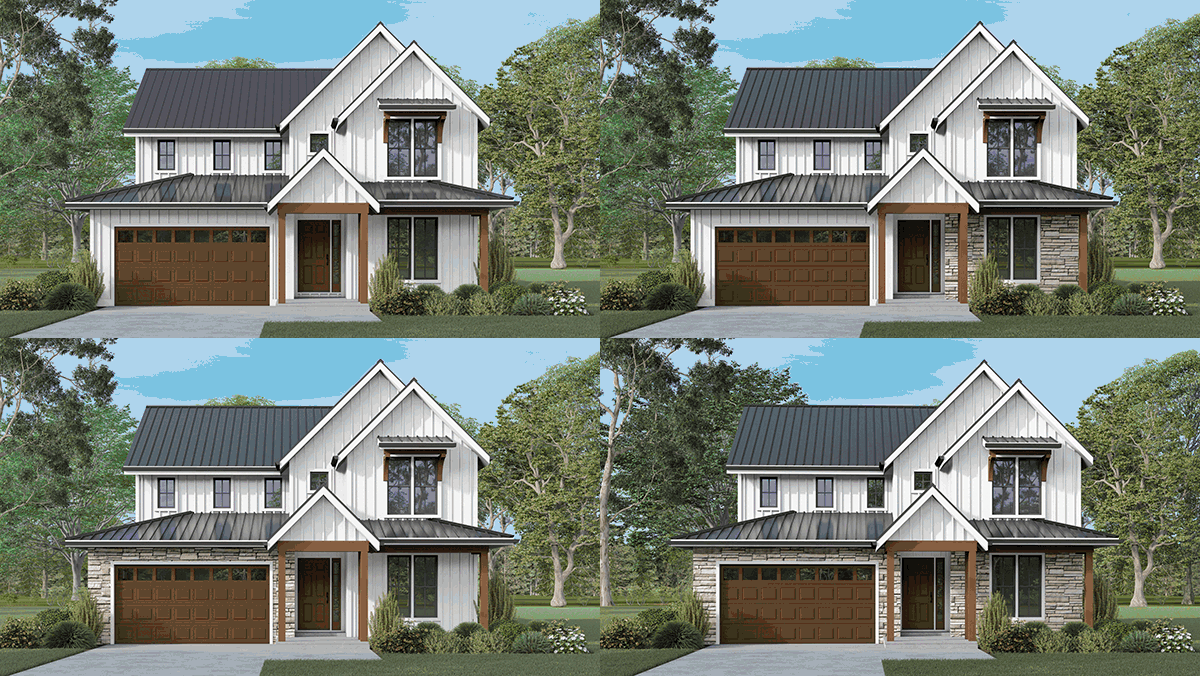
Stone is a more expensive material than other types of siding—that’s why it’s so often used as an accent rather than the main wall covering for today’s homes. If cost is a factor for you, you can maximize stone for your dollar by applying it to flats and skipping corners. Prioritize street-facing areas and let your budget go to covering up to the edge of the wall rather than wrapping around it. This way, you can optimize your façade and avoid spending on sides that won’t be seen.
If you’ve been inspired to get creative and embellish your home with stone or brick, take a look at what Eldorado Stone and Cultured Stone have to offer! With plenty of chic and rustic profiles in a full range of nature-inspired hues, you’re sure to find a great match for any house and exterior design scheme. You can even virtually try before you buy on a sample image or your own photo with a stone visualizer that uses AI to identify different walls and makes them individually editable. It couldn’t be easier to get started!


