
Search By Square Foot
• Up to 1000 Sq Ft
• 1001 - 1500 Sq Ft
• 1501 - 2000 Sq Ft
• 2001 - 2500 Sq Ft
• 2501 - 3000 Sq Ft
• 3001 - 3500 Sq Ft
• 3501 - 4000 Sq Ft
• 4001 - 4500 Sq Ft
• 4501 - 5000 Sq Ft
• 5001 Sq Ft And Up
Search By Square Foot
• Up to 1000 Sq Ft
• 1001 - 1500 Sq Ft
• 1501 - 2000 Sq Ft
• 2001 - 2500 Sq Ft
• 2501 - 3000 Sq Ft
• 3001 - 3500 Sq Ft
• 3501 - 4000 Sq Ft
• 4001 - 4500 Sq Ft
• 4501 - 5000 Sq Ft
• 5001 Sq Ft And Up
.png)
.png)
Building in New York means designing for a climate and a code framework that shifts significantly across the state. Most of New York sits on glacial till, the dense, rocky mix left by retreating ice sheets, which makes full basements both practical and common from Buffalo and Rochester down through Albany and the Hudson Valley. On Long Island, sandy outwash soils and a high water table change the calculus: crawlspaces or slab-on-grade foundations are often more practical than full excavation, and flood-zone setbacks apply across much of the South Shore.
Ground snow loads tell a similar story of regional contrast: the Tug Hill Plateau west of the Adirondacks sees some of the highest ground snow loads in the continental U.S., while New York City and Nassau County carry far lighter requirements. All of this is governed by the 2020 Building Code of New York State (BCNYS), which adopts the IRC with state-specific structural and energy amendments. New York City operates under its own NYC Building Code, adding a separate layer that requires a registered design professional on virtually every residential project.
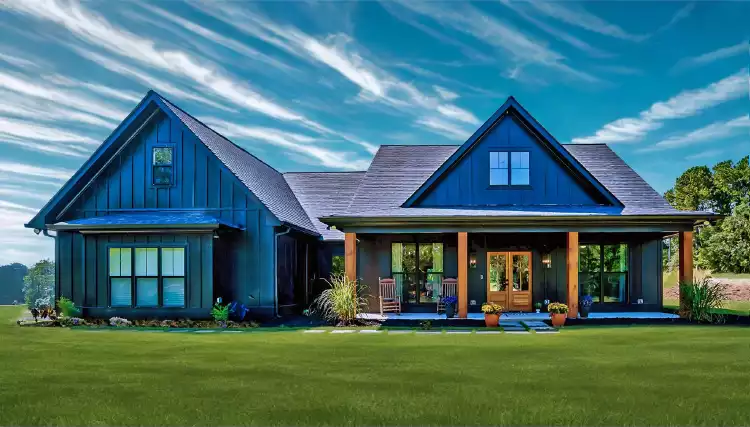
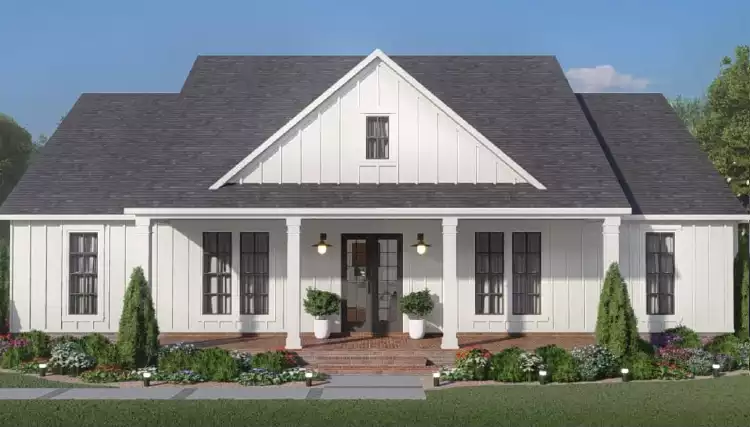
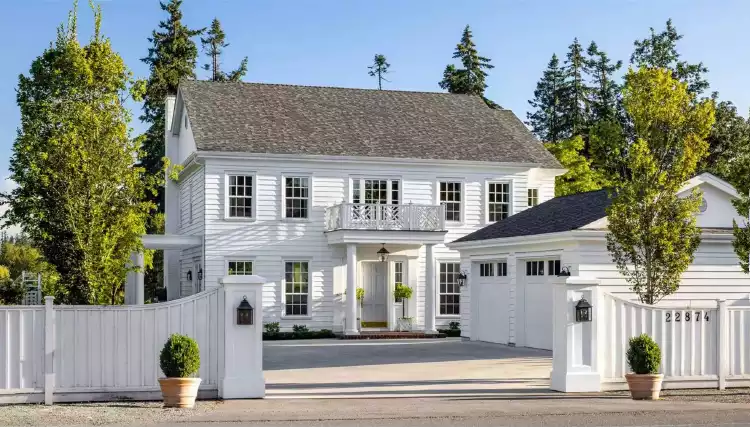
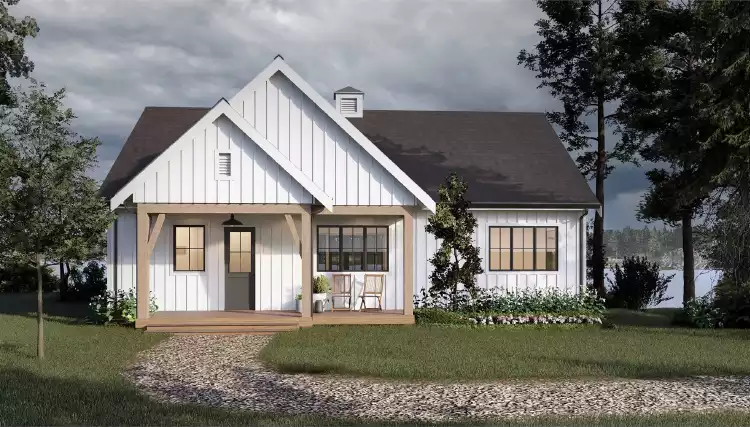
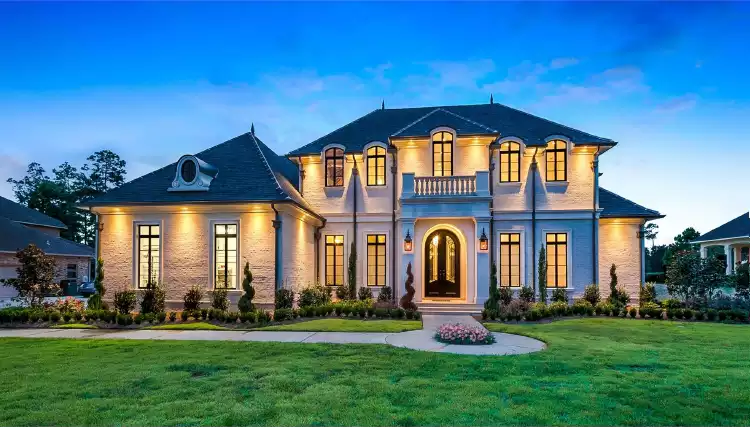
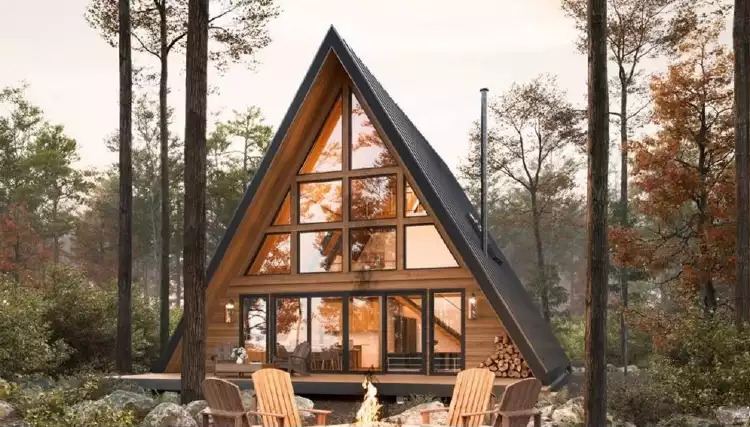
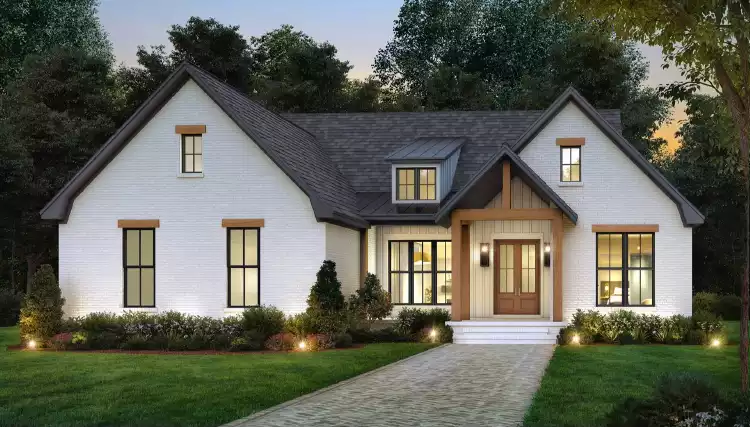
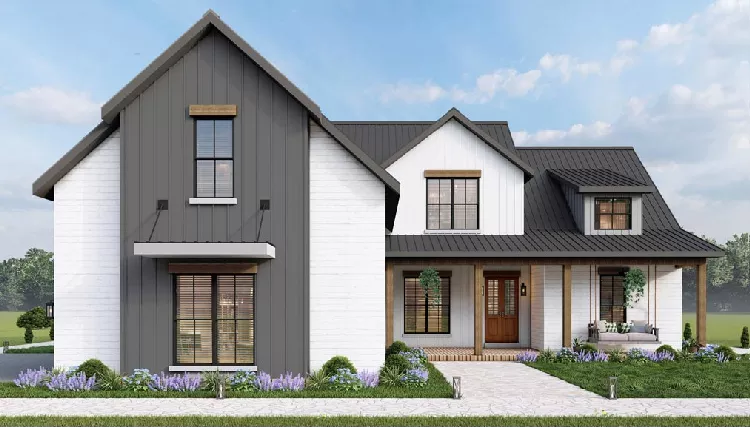
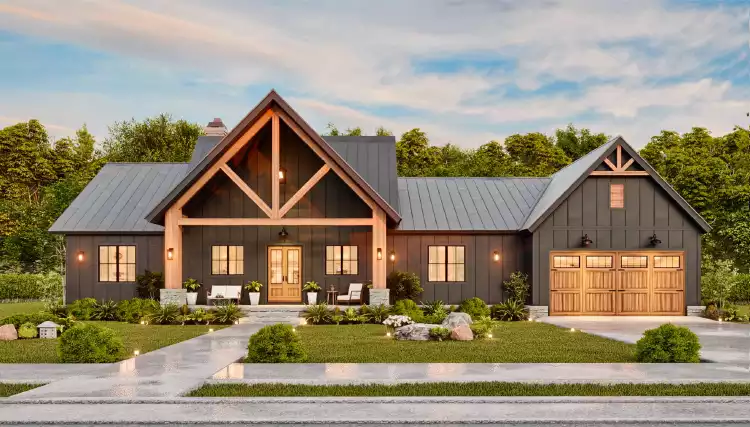
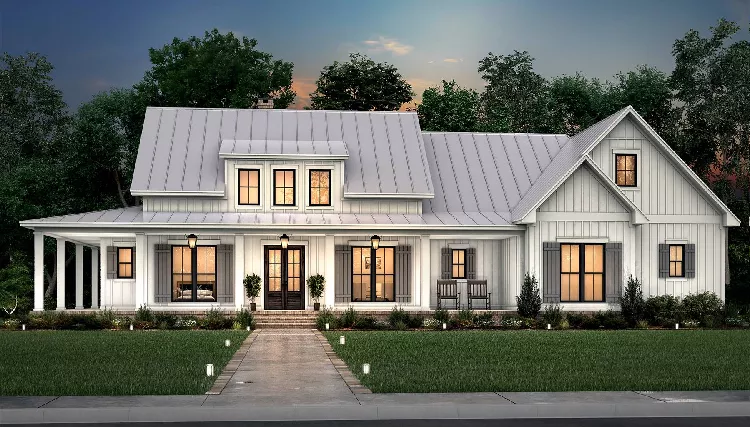
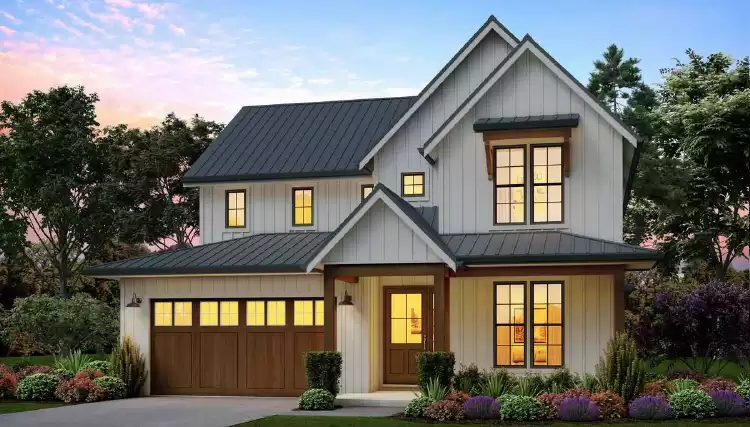
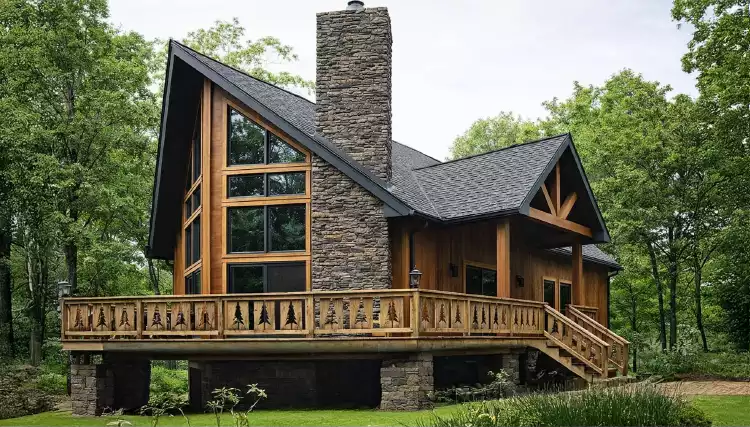
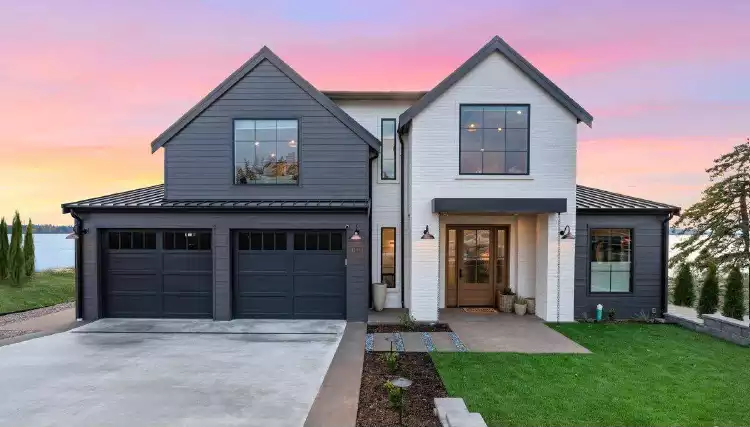
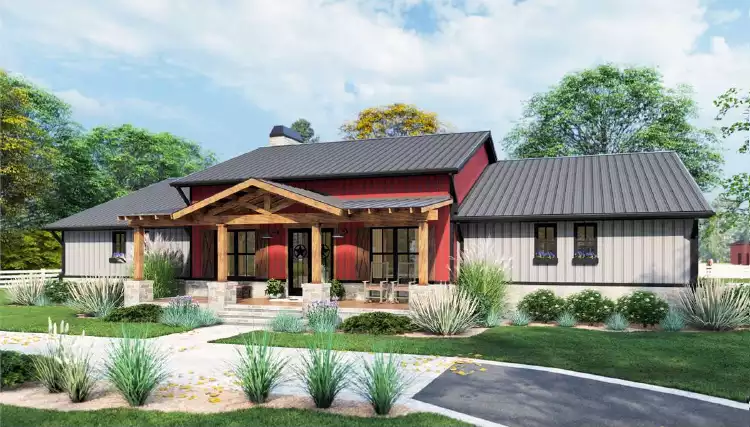
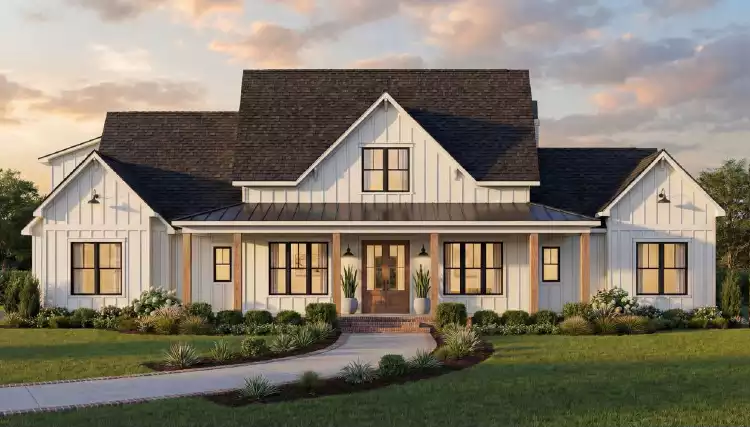
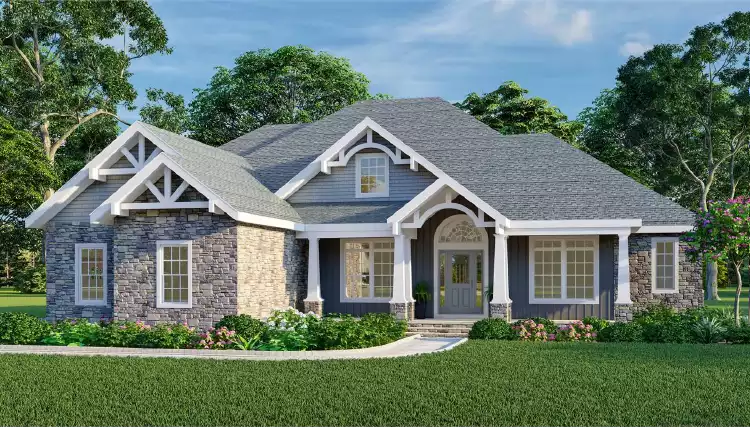
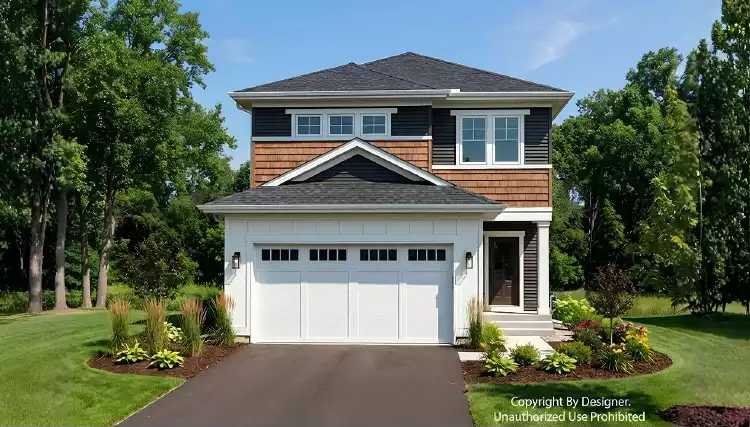
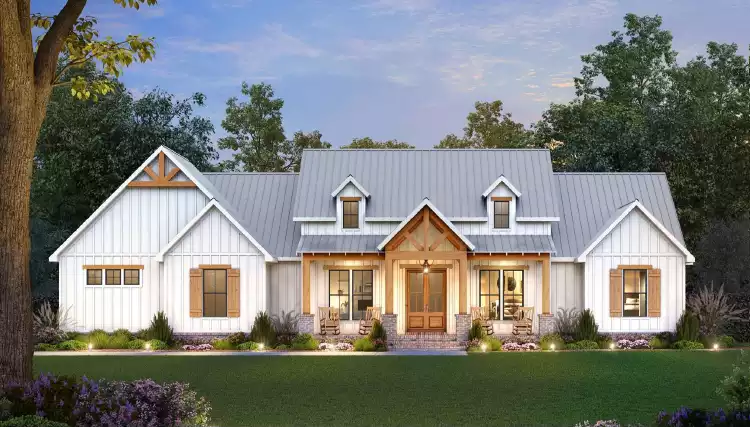
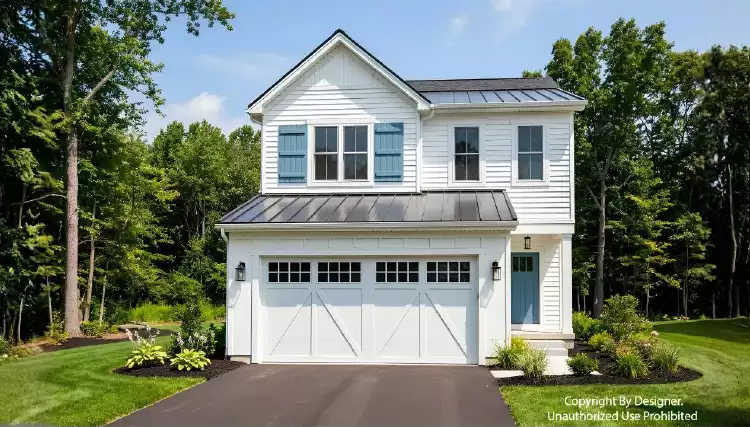
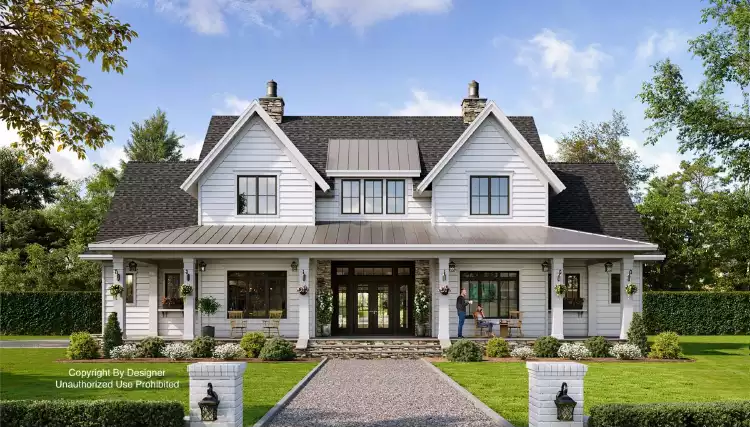
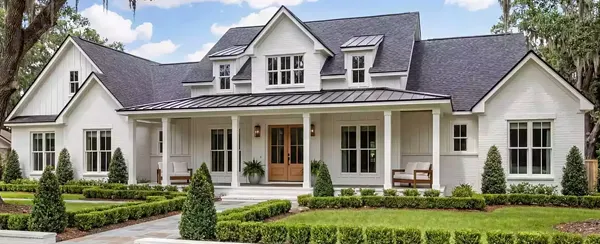
Our collection of New York house plans spans styles that fit the state’s architectural history and regional character, from classic colonials and Cape Cods in established suburbs to Craftsman and modern farmhouse designs for new construction, and cabin and lodge styles for mountain and lake properties across the Adirondacks and Catskills. Clapboard siding and brick are regional staples on Long Island and in Westchester, while cedar and standing-seam metal roofing are common in upstate mountain builds.
You’ll find plans suited to full basement foundations, narrow lots as found in older Syracuse and Albany neighborhoods, and larger footprints for open acreage like you'll see outside Rochester and Buffalo. Most plans include 2x6 exterior wall framing for the deeper insulation cavities the New York State Energy Conservation Construction Code (ECCCNY) requires, along with steep roof pitches, mudrooms, and tight building envelopes for cold-weather performance. These plans range from under 1,500 to over 5,000 square feet to suit all needs.
New York receives significant snowfall across much of the state, and roof structures need to be built to handle it. Properties at higher elevations, including areas in the Adirondacks, Catskills, and Tug Hill Plateau, carry heavier snow load requirements than lower-elevation locations. Your local building department or engineer will confirm the ground snow load value for your specific site and ensure the roof framing meets it.
Coastal areas, including Long Island and parts of the Hudson Valley, face wind conditions that influence how the structure is connected and braced. These requirements are generally manageable through standard framing upgrades, but they need to be confirmed by a local professional before permitting.
New York enforces a residential energy code that requires solid insulation levels, efficient windows, and mechanical systems suited to the state's cold winters and humid summers. Most new construction uses 2x6 exterior wall framing to accommodate deeper insulation, along with air sealing and high-performance HVAC specifications.
If you're building within the five boroughs, note that New York City operates under its own building code, which adds requirements around structural review, wind exposure categories, and design professional involvement. A licensed NYC architect or engineer must be engaged early in the process.
All plans can be modified before you build. Common requests for New York builds include expanding the garage, adding a sunroom or screened porch, reconfiguring the kitchen or primary suite, or adjusting the basement layout. If you're building in a high-snow or coastal area, our modification team can help adjust roof framing specs or structural details to support local engineer review. Click "Modify This Plan" on any plan page for a free estimate.
If your project requires engineering services, we’re here to help. Through our nationwide network of licensed engineers, we can connect you with qualified professionals who can review, update, and structurally stamp your house plans to meet the permitting requirements of your state, county, or local municipality, if needed. To request engineering pricing, simply contact us by email, live chat, or calling 866-214-2242, and our team will be happy to provide an estimate, answer your questions, and review expected delivery timelines.
Most of New York State follows the 2020 Building Code of New York State (2020 BCNYS), which adopts the IRC with state-specific amendments covering structural loads, energy performance, and fire safety. Energy performance is governed separately by the New York State Energy Conservation Construction Code (ECCCNY), which sets requirements for insulation, windows, air sealing, and mechanical systems. New York City operates under its own NYC Building Code, which is more stringent and requires a registered design professional to file plans for most residential projects. Your local building department will confirm which edition and amendments apply to your permit.
Yes. Roof structures must be designed to support the snow loads specific to your location. In northern and higher-elevation areas, those loads are substantially higher than the state average. When you apply for a permit, your local building department will confirm the ground snow load for your site. If you're building in a high-snow area, a licensed engineer should review the roof structure before you finalize your plan.
Yes. The frost line across most of New York runs 36 to 48 inches deep, which means foundations must be set well below grade regardless of whether you finish the space. On glacial till soils common throughout the Hudson Valley, Capital Region, and Western New York, full basements are both practical and cost-effective because the excavation is already required. On Long Island’s sandy outwash soils, where the water table is higher and the ground drains quickly, a crawlspace or slab-on-grade may be more appropriate depending on your specific lot. Confirm foundation type with your builder and local building official before finalizing your plan.
Yes. Coastal locations face wind exposure and, in some zones, flood elevation requirements that affect how the home is designed and sited. Your plan may need structural adjustments to account for wind loads, and flood-zone lots may require the living level to be elevated above a designated flood elevation. A local engineer familiar with your county's requirements should review your plan before permitting.
New York City has its own building code that applies on top of state requirements. It includes stricter structural, wind, and seismic provisions, and requires a registered design professional, either an architect or engineer, to sign off on plans for most projects. If you're building in the five boroughs, engage a licensed NYC professional early. This step is mandatory, not optional.
Colonial, Cape Cod, and Victorian styles are well-established across Long Island, Westchester, and older suburbs in the Albany and Syracuse metro areas. Craftsman and modern farmhouse designs are popular for new construction throughout suburban communities in the Hudson Valley and Capital Region. In the Catskills and Hudson Valley, farmhouse and cottage styles fit naturally into the landscape and are common in towns like Woodstock, Rhinebeck, and Kingston. Upstate and across the Adirondacks, cabin and lodge designs are standard for vacation properties around Lake Placid, Saranac Lake, and the Finger Lakes. Buffalo and Rochester favor traditional two-story colonials and Craftsman bungalows in established neighborhoods.
New York enforces one of the more demanding residential energy codes in the country through the New York State Energy Conservation Construction Code (ECCCNY), which is updated on a faster cycle than most states. It sets minimum insulation levels, window U-factors, air leakage limits, and HVAC efficiency requirements that go beyond the baseline IRC. In practice, this means most new construction uses 2x6 exterior wall framing to create deeper insulation cavities, triple-pane or high-performance double-pane windows, and whole-house mechanical ventilation in tight builds. If you’re building near New York City or in a jurisdiction that has adopted the NYC Energy Conservation Code, additional requirements apply. Your builder will confirm the specific edition in effect at permit time.
Yes. Modifications are common and expected. Popular changes include expanding or reconfiguring the basement, adding a mudroom, enlarging the garage, or adjusting the roof pitch. Click "Modify This Plan" on any plan page for a free estimate. Keep in mind that New York requires a licensed engineer or architect to review and stamp plans for most permit applications, so build that step into your project timeline.