
Search By Square Foot
• Up to 1000 Sq Ft
• 1001 - 1500 Sq Ft
• 1501 - 2000 Sq Ft
• 2001 - 2500 Sq Ft
• 2501 - 3000 Sq Ft
• 3001 - 3500 Sq Ft
• 3501 - 4000 Sq Ft
• 4001 - 4500 Sq Ft
• 4501 - 5000 Sq Ft
• 5001 Sq Ft And Up
Search By Square Foot
• Up to 1000 Sq Ft
• 1001 - 1500 Sq Ft
• 1501 - 2000 Sq Ft
• 2001 - 2500 Sq Ft
• 2501 - 3000 Sq Ft
• 3001 - 3500 Sq Ft
• 3501 - 4000 Sq Ft
• 4001 - 4500 Sq Ft
• 4501 - 5000 Sq Ft
• 5001 Sq Ft And Up
Building in California means navigating one of the strictest building codes in the country. It's important to understand the specific code for your area and what's needed on your construction documents to obtain a building permit—luckily, our seasoned team of house plan experts is here to help! Every new home must comply with Title 24, the California Building Standards Code, which covers everything from seismic design and energy performance to mandatory solar photovoltaic systems on new residential construction. Whether you’re planning a Spanish-inspired villa in the San Fernando Valley, a modern hillside retreat in the Bay Area, or a California Craftsman bungalow along the Central Coast, our California home plans give you a code-compliant starting point that accounts for the realities of building in the Golden State.
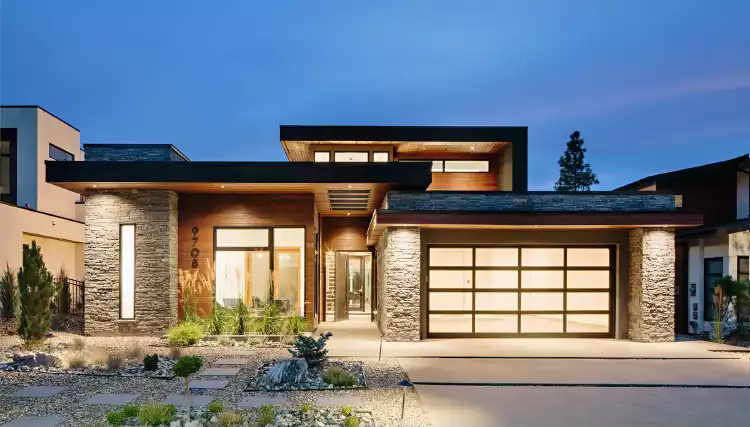
Our collection of California house plans spans a range of styles that reflect the state’s architectural diversity, from mid-century modern and Spanish Colonial Revival to contemporary and coastal designs. You’ll find plans suited to flat suburban lots, narrow urban infill parcels, and sloped hillside properties with walkout or stepped foundations.
Many feature the indoor-outdoor layouts California is known for, with California rooms (covered open-air living spaces), courtyard entries, and large sliding glass walls that connect the great room to the patio. Whether you’re looking for California ranch house plans with single-story living or a two-story contemporary, all designs conform to the International Residential Code (IRC) and can be adapted by a local engineer to meet your jurisdiction’s specific Title 24 amendments and seismic zone requirements. Plans range from under 1,500 to over 6,000 square feet.
If your project requires engineering services, we’re here to help. Through our nationwide network of licensed engineers, we can connect you with qualified professionals who can review, update, and structurally stamp your house plans to meet the permitting requirements of your state, county, or local municipality, if needed. To request engineering pricing, simply contact us by email, live chat, or calling 866-214-2242, and our team will be happy to provide an estimate, answer your questions, and review expected delivery timelines.
California enforces Title 24, the California Building Standards Code, which goes beyond the standard IRC adopted in most other states. Title 24 includes 12 parts covering structural safety, energy efficiency (Part 6), green building requirements through CALGreen (Part 11), and fire safety. Local jurisdictions can add amendments on top of state minimums, so requirements may vary between cities and counties.
Since 2020, all new single-family homes and low-rise multifamily buildings must include rooftop solar PV systems under the state's energy code. Our California house plans are designed with these California code-compliant standards in mind, though your local building department will confirm exactly which edition of the code applies to your permit application.
Yes. California's seismic design requirements are among the strictest in the nation. The structural provisions in Title 24 are based on ASCE 7 (the standard for determining loads on buildings) and require homes to resist lateral forces from earthquakes. In practice, this means specific framing details like hold-downs, shear walls, and foundation anchorage that go beyond what's required in non-seismic states. Our plans include general structural specifications, but a licensed California engineer will need to review and stamp the plans for your specific seismic zone and soil conditions before permitting.
Properties in designated Wildland-Urban Interface (WUI) zones must comply with additional fire-hardening requirements under the California Wildland-Urban Interface Code (formerly CBC Chapter 7A). This includes Class A rated roofing, ember-resistant vents, non-combustible siding or ignition-resistant materials, tempered or multi-pane glazing, and enclosed eaves. If your lot falls in a High or Very High Fire Hazard Severity Zone, your plan will need modifications to meet these WUI fire-resistant standards. Our modification team can help adjust exterior specifications to comply with WUI requirements for your specific area.
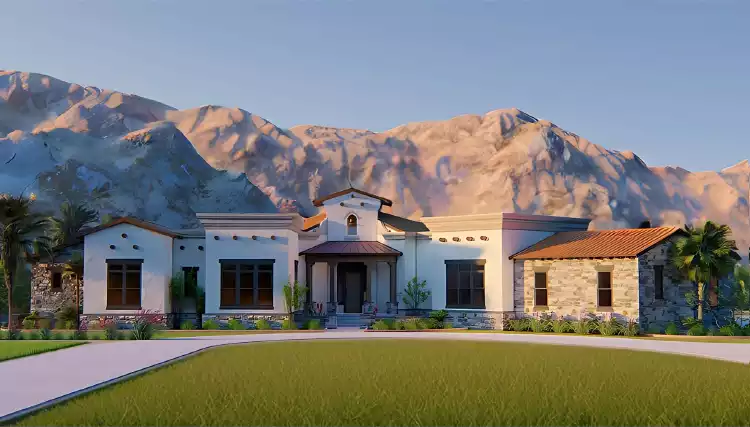
California's architectural landscape is one of the most diverse in the country. In Southern California and the San Diego and Orange County coast, Spanish Colonial Revival and Mediterranean styles dominate, with stucco exteriors, clay tile roofs, and courtyard layouts. The Bay Area and Northern California lean toward Craftsman bungalows, mid-century modern, and contemporary designs. California bungalow house plans remain a popular choice for their efficient layouts and classic Craftsman detailing.
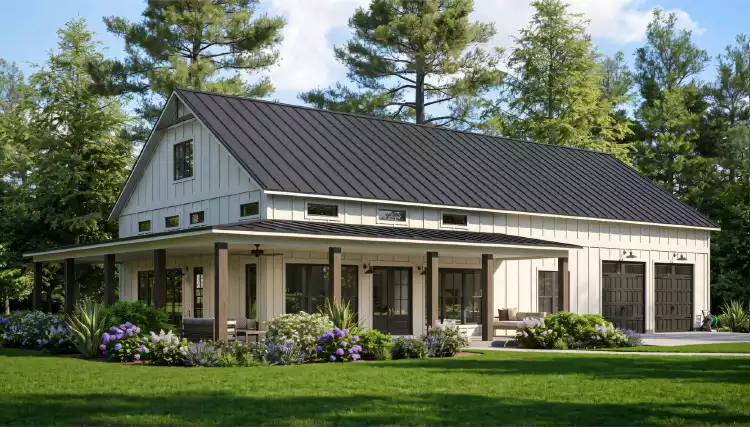
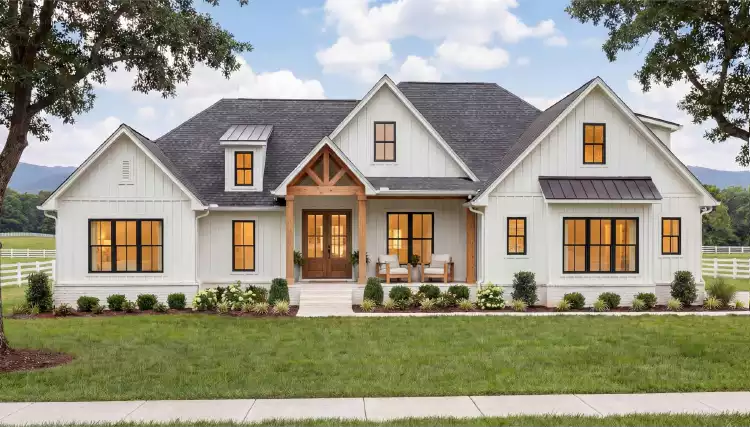
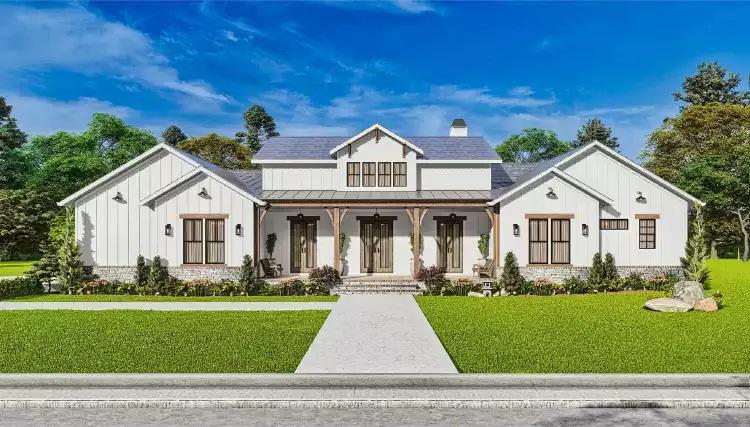
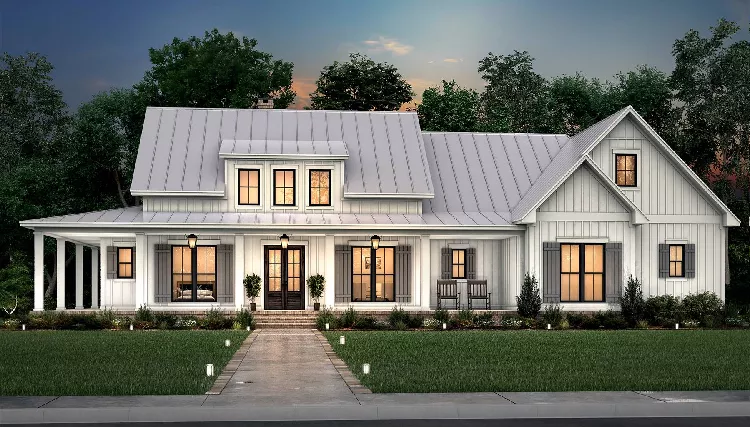
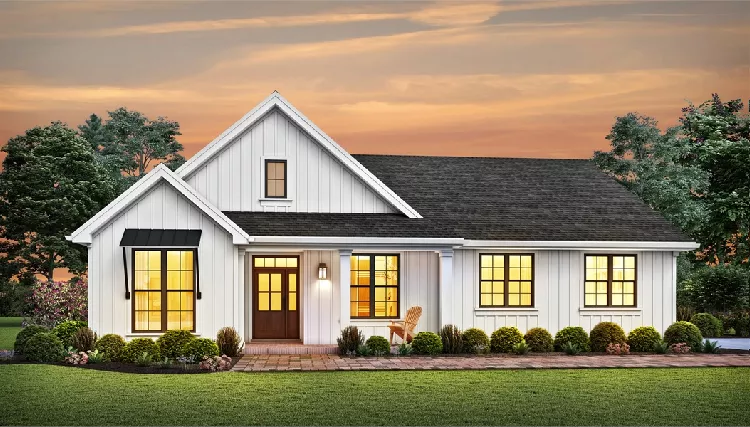
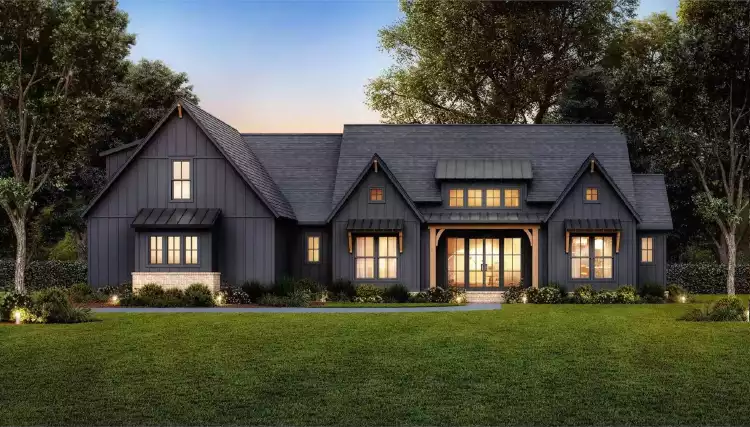
California ranch house plans are also in demand, especially in the Sacramento Valley, Inland Empire, and suburban communities where single-story living is preferred. Across the state, modern farmhouse and transitional styles have grown in popularity. What unites most California home design is a focus on open floor plans, large windows, and indoor-outdoor living spaces that take advantage of the climate.
Many of our plans are well-suited for sloped lots, which are common throughout California's coastal hills, canyons, and mountain communities. Look for designs with walkout basements or daylight lower levels, which can be adapted to stepped foundations that follow the natural grade. Building on a slope typically requires a geotechnical report and site-specific foundation engineering, including possible retaining walls and specialized drainage. Our plans provide a solid design baseline, and your local structural engineer will tailor the foundation system to your lot's grade and soil conditions.
Yes. Since January 2020, California's Energy Code (Title 24, Part 6) requires solar photovoltaic systems on all new single-family homes and low-rise multifamily buildings up to three stories. The system must be sized to offset the home's projected annual energy use, typically between 2.7 and 5.7 kilowatts depending on home size and climate zone. If you add a battery storage system of at least 7.5 kWh, the required solar system size can be reduced by 25%. Some exemptions exist for heavily shaded roofs or homes in approved community solar programs. Plan for this requirement in your construction budget from the start.
Yes, and it's one of the most common modification requests we receive for California builds. California's ADU legislation (SB 9, AB 68, and subsequent updates) has made it significantly easier to add an accessory dwelling unit, sometimes called a granny flat, casita, or in-law suite, to single-family properties statewide. Most California jurisdictions now allow at least one ADU plus one junior ADU (JADU) on any single-family lot, with streamlined permitting. Our tiny house plans work well as standalone ADU designs, and many of our larger California house plans can be modified to include an attached or detached ADU. Click "Modify This Plan" on any plan page for a free estimate on adding an ADU to your chosen design.
Absolutely. Common modifications for California builds include adjusting exterior materials for WUI compliance, reconfiguring the layout for a specific lot orientation, adding an ADU or casita, expanding the outdoor living area, or adapting the foundation for a sloped site. Click "Modify This Plan" on any plan page for a free estimate. Keep in mind that California requires a state-licensed architect or engineer to stamp plans for permit submission, so factor in a local professional review as part of your process.