

Search By Square Foot
• Up to 1000 Sq Ft
• 1001 - 1500 Sq Ft
• 1501 - 2000 Sq Ft
• 2001 - 2500 Sq Ft
• 2501 - 3000 Sq Ft
• 3001 - 3500 Sq Ft
• 3501 - 4000 Sq Ft
• 4001 - 4500 Sq Ft
• 4501 - 5000 Sq Ft
• 5001 Sq Ft And Up
Search By Square Foot
• Up to 1000 Sq Ft
• 1001 - 1500 Sq Ft
• 1501 - 2000 Sq Ft
• 2001 - 2500 Sq Ft
• 2501 - 3000 Sq Ft
• 3001 - 3500 Sq Ft
• 3501 - 4000 Sq Ft
• 4001 - 4500 Sq Ft
• 4501 - 5000 Sq Ft
• 5001 Sq Ft And Up
.png)
(1).png)
Years ago house plans were delivered as a set of blueprints that were pages with white lines and lettering on a dark blue background due to the printing process of that era.
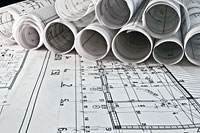
Today, house plans are often still referred to as blueprints but are printed on large format, digital printers, usually on bond paper offered mostly in five or eight set packages depending on how many plan sets are needed. The city or county may require two sets of plans, one for their files and one to have on the jobsite. If a mortgage is needed, the bank may require a set of plans. The home builder needs a couple of copies to share with subcontractors, and the homeowner will need a set of plans.
The most popular plan package is the PDF digital format plan allowing plans to be quickly delivered by email for general contractor bidding, product estimations and more. A CAD plan is used for plans that need major changes and modifications
It's important to remember that stock house plans are designed to meet the current IRC building code but, due to regional differences in local codes, building practices and snow and wind loads, modifications may be needed to the plan. Some changes can be handled by your builder or a local designer, and other plans may need additional engineering details depending on local building codes. Our seasoned house plan experts are available to provide more information on your local code requirements.
What you can expect in house plans from The House Designers:
Some of our home plans will include an electrical layout showing a suggested location for fixtures and outlets. Keep in mind that this is primarily used as a reference only, useful for bidding and obtaining quantities. It's common practice to meet with your builder and the electrician before the electrical work starts to go over the plan, sometimes with a walk-through of the home to fine tune the fixture and switch locations to your preference. During the rough-in construction process, cables and outlets for internet can also be specified. Careful planning at this stage is important.
Cabinet elevations are also usually provided with your plans and, like the electrical plan, this is mainly a guide for estimating purposes. Cabinets are an easy item to customize and your builder, or their cabinet maker, will work with you early on in the process to ensure that the correct cabinets are specified. Make sure you customize your cabinetry in all rooms to your personal preference.
Where do you go from here?
Assuming that you have your building site and house plans in hand, you're now ready to interview builders and begin to assemble the additional items needed to get a building permit. Your builder may be able to help you with a site plan which is a drawing that shows the building site and locates your home plan, building setbacks, utilities and, if needed, a septic plan and permit.
To help you understand the different architectural styles, see our information on How to Chose the Right House Plan and Architectural Floor Plan Styles.
For any questions or help in your home plan search, please email or call our experienced team of home plan search specialists who will be happy to help you at 866-214-2242.


